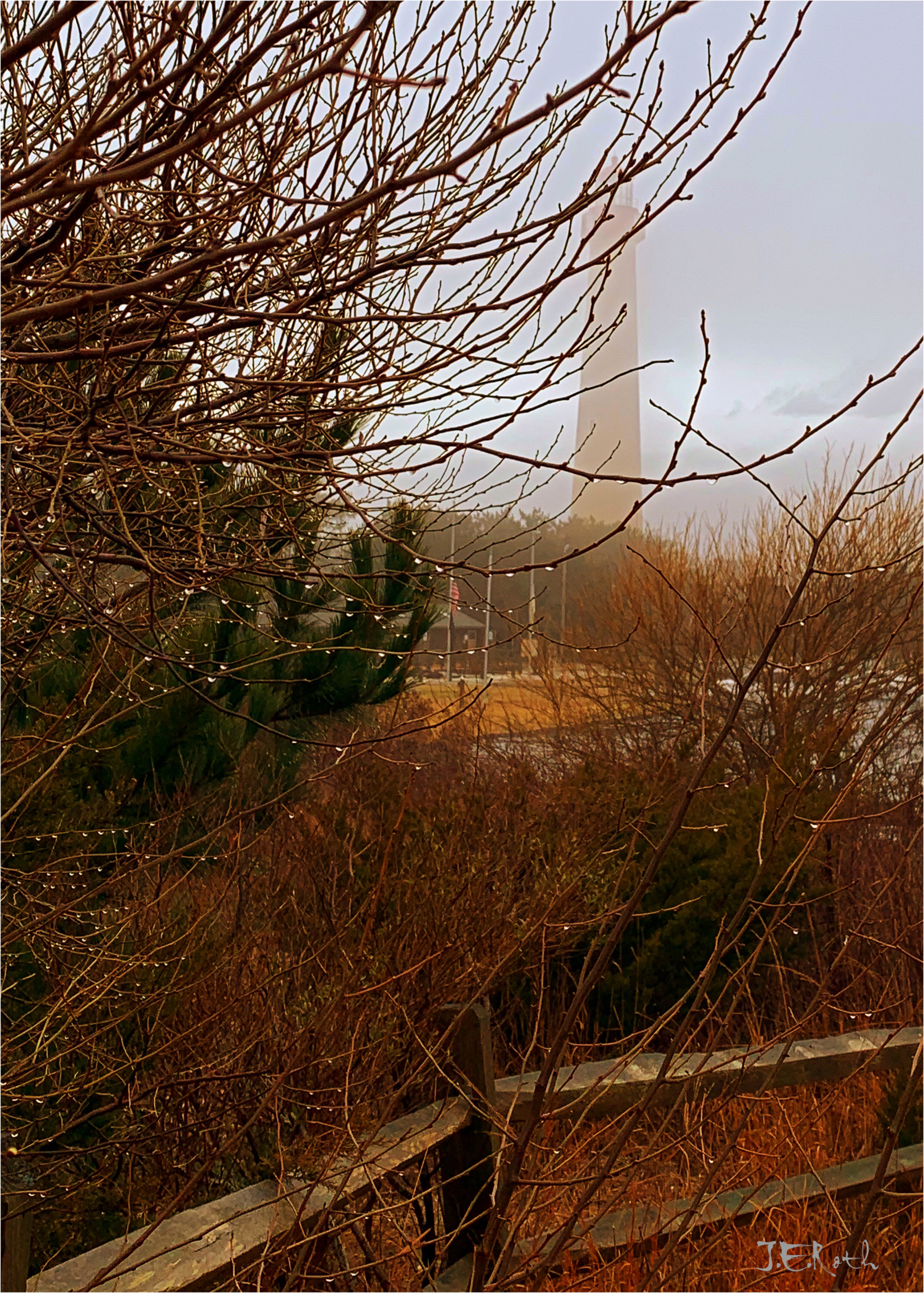
After months of snow and ice The rains return, Erasing dirty dunes and saturating frozen earth.
Window’s blowing curtains open wide I sleep but dreams don’t stay, Instead my brain replaying scenes: Deserted trains to nowhere, speeding past.
I strain to free myself from demons past, long-buried, deep. I thought it would be so easy, But I remain a gasping, grasping soul.
Tonight the night is dark and dank, The raindrop rhapsody ensues again, And still, I stand alone, Apart, adrift, again.
〰〰〰〰
Written for The Speakeasy 152, making reference to Bee Gees’ “Stayin’ Alive” video and using the words: “It would be so easy” in the post .
Here are the rules:
Your post must be dated March 9, 2013, or later.
Submissions must be 750 words or fewer.
Submissions must be fiction or poetry.
You must include the following sentence ANYWHERE within your submission: “It would be so easy.”
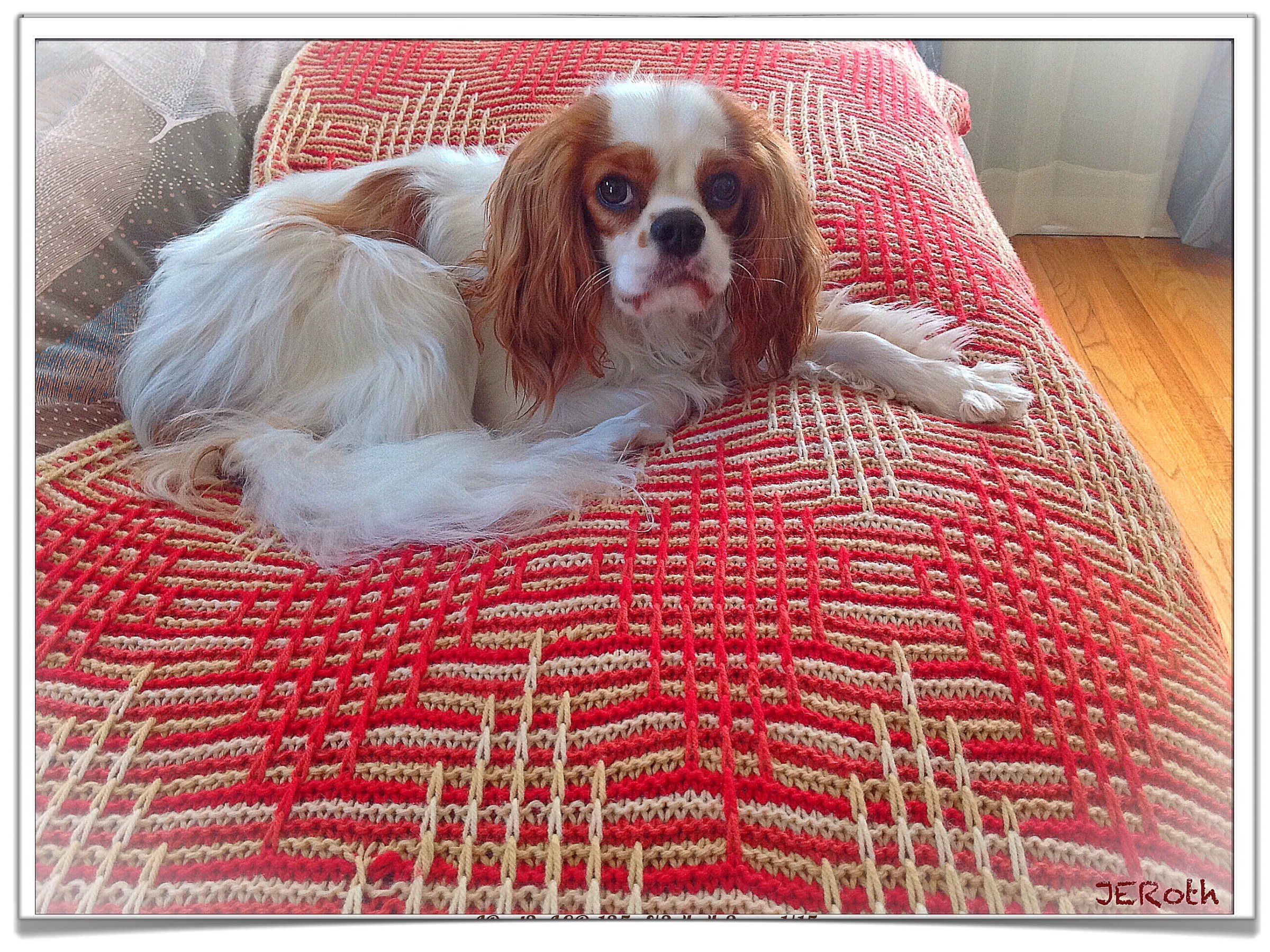
The gallery showcased above, includes two ‘takes’ on the “Weekly Photo Challenge” prompt.
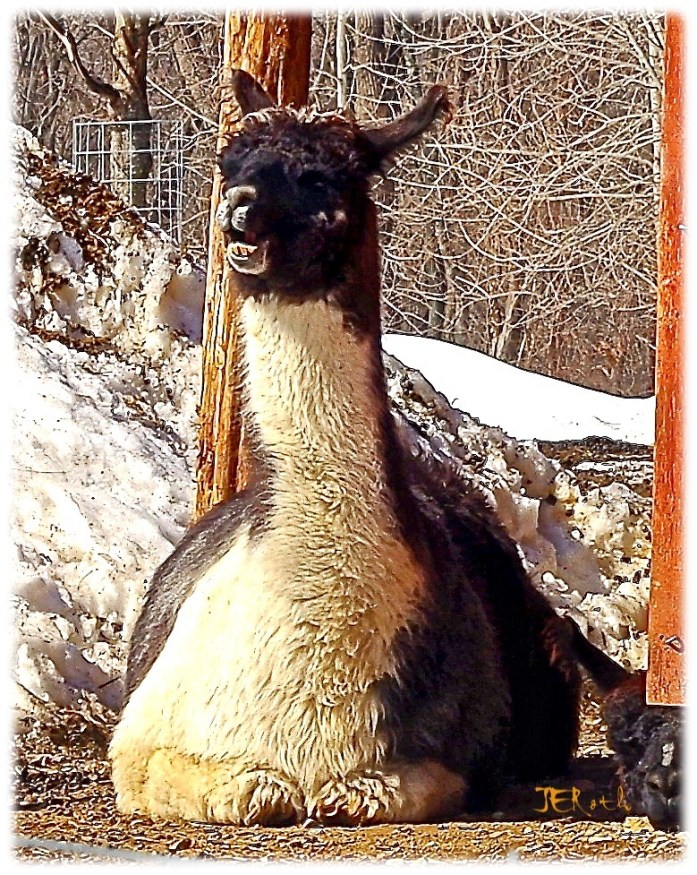
A beautifully symmetrical knitted stitch pattern, while satisfying and calming in a way that only complex patterns, colors and textures can be, the un-cropped photo reveals an entirely different kind of satisfaction; the ‘I-found-this-cozy-spot-and-I’m-not-budging’ look on his face, speaks volumes.
After the winter that we on the east coast have had, the next photo could be a treacherous, hard, icy surface. Actually, it is the close-up perspective of a refreshing glass of water on a sizzling Florida afternoon. The surface of the plastic glass is sweating in dripping droplets of condensation.
Both are examples of how one’s perspective colors the story behind the subject captured in a camera lens.
It was January, 2012. When I look at this photograph I am transported back to that beautiful Santa Barbara beachfront resort, where we spent our pre-retirement weekend, replaying the events and conversations from the previous few days.
I had given notice of my intended retirement, nearly four weeks earlier in mid-December, and only 2 weeks remained before I would be free as a bird after 45 years in the corporate world. Soon, I would have time for my 5 grandsons, my husband, my ailing Sheltie, Shadow; and time to begin doing things because I wanted to do them, rather than because I had to do them.
In the days leading up to our weekend, we had been at Orange headquarters for a Senior Executive Staff Meeting (my last). Since the executive team was together for the meeting, the CEO planned a lovely farewell dinner, in my honor at a local restaurant in Anaheim, not far from Angels Stadium. My husband had joined me for the week and the dinner, after which we intended to drive north to Santa Barbara for what was to have been a pre-retirement, celebratory weekend.
We hadn’t planned on the wrinkle in our carefully-crafted plans; the CEO asked me not to leave. The barrage of pressure began early in the week and at each turn, with each workshop and every session, there were not-so-subtle allusions to my not leaving.
The irony did not escape me, that after years of being a woman in a traditionally male profession; struggling for recognition and parity; waiting for the cream to rise to the top, the well-deserved pat on the back, I was, finally and very publicly, getting what I had, so earnestly, sought for so very long. It was nice being appreciated, needed, valued. And yet, I was ready to put it all behind me and embrace the next phase of my life.
As I look at this photograph, I remember that Santa Barbara morning and the decision we faced; to stay on another month (and all that the extended timeline entailed) or to leave as we had planned. As we walked on the deserted beach at sunrise, I imagined myself as the seagull soaring high above the water’s edge, with only the sky and the sea as boundaries. I viewed my decision from that lofty perspective – uninvolved and un-catchable, unless I allowed it. It was an empowering and revealing revelation.
Once back in the room, I picked up my cell phone and called him. I don’t think that I knew what I would say until the words were said.
Life had once been defined by linears and absolutes.
Our intersections well-combined; concentric pegs, ladders and chutes.
Cabin logs fit, notch on notch and oaken floors laid tongue-in-groove,
Alpha letters etched on blocks, built towers high to stand, unmoved.
Our party lines were wired hard, and gaslights lit by hand each night,
Electric links for trolley cars, with route lines linear and tight.
The water pumps in cities wide and far abroad, pumped clear and clean,
Until the ground was compromised by viral beasts; minute, unseen.
We trusted water flowed downhill; that east was where the morn began,
We trusted spring’s return until the polar vortex blew its plan.
Was it we who changed the plan, who damaged waters cross the plains?
Who built an ether-web to span each others lives and sagging brains?
No longer absolute or straight; each turn untried, leading where?
Were all connected, yet apart: No man an island, but no one’s there.
This was written for Speakeasy 151, using the provided opening line, “Life had once been defined by linears and absolutes” and making reference to the provided photo by Odon Czintos, ” The Blue Street Fountain”.
It was nearly eight degrees, that sunny afternoon in upstate New York. Though we were well-mittened, wrapped in wraps and protected from head to toe, there was no denying that it was COLD!
We carefully traversed the picturesque bridge and were taking in the wonderful expanse of woodland whiteness that lay before us, when loud quacking on the not-too-distant horizon, captured our attention. On the icy covered pond about fifty feet away, was a flock of ducks, geese, and a couple of lovely, white swans. I realized at that moment that these little guys were dealing with the weather, much the same way we were. Most dramatically though, the pair of swans was walking away from the flock, web-footed and traction-less, across the icy expanse, towards the bridge on which we stood. It was as if they were having the same conversation we had just had a few moments earlier:
“Be careful, honey, it’s very icy!”
“I know, I know!”
“No, really, we’re not as young as we used to be. One mis-step or slip and …”
“I know, I know. Just hold my hand and indulge me, as I stop to snap a few pictures.”
“Ok! I’m freezing, but you have to take your pictures. It’s a good thing I love you!”
The swans were, apparently, on a mission, but in no particular hurry;, staying close to each other, either side by side, or walking just behind. They progressed methodically, slipping and sliding and occasionally flopping down unceremoniously, on their bellies.
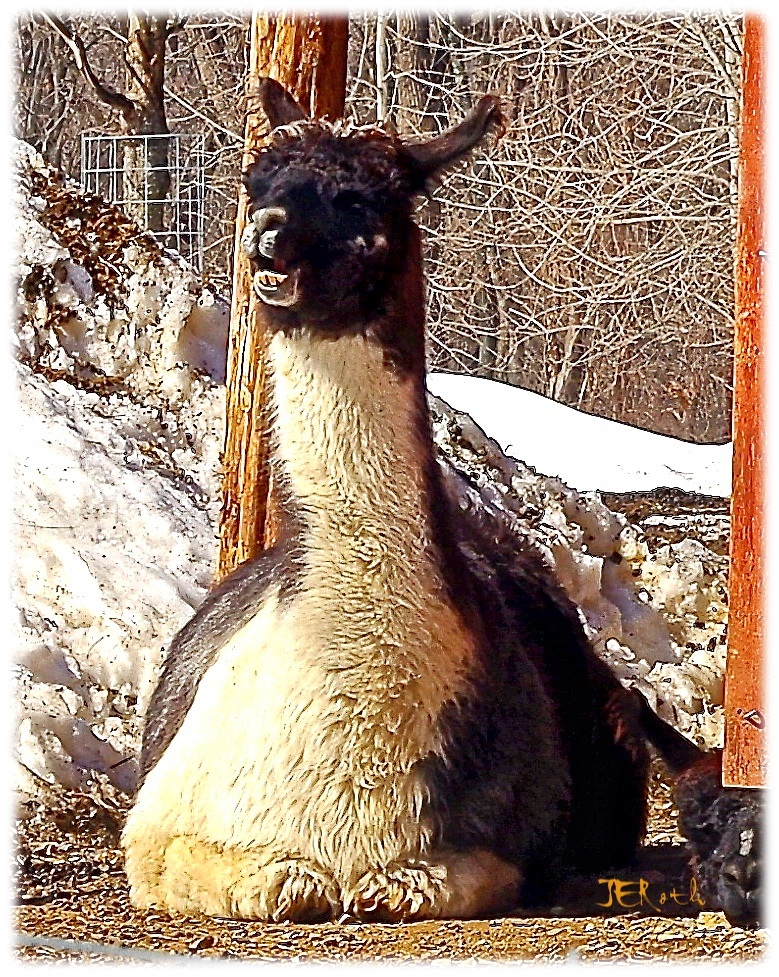
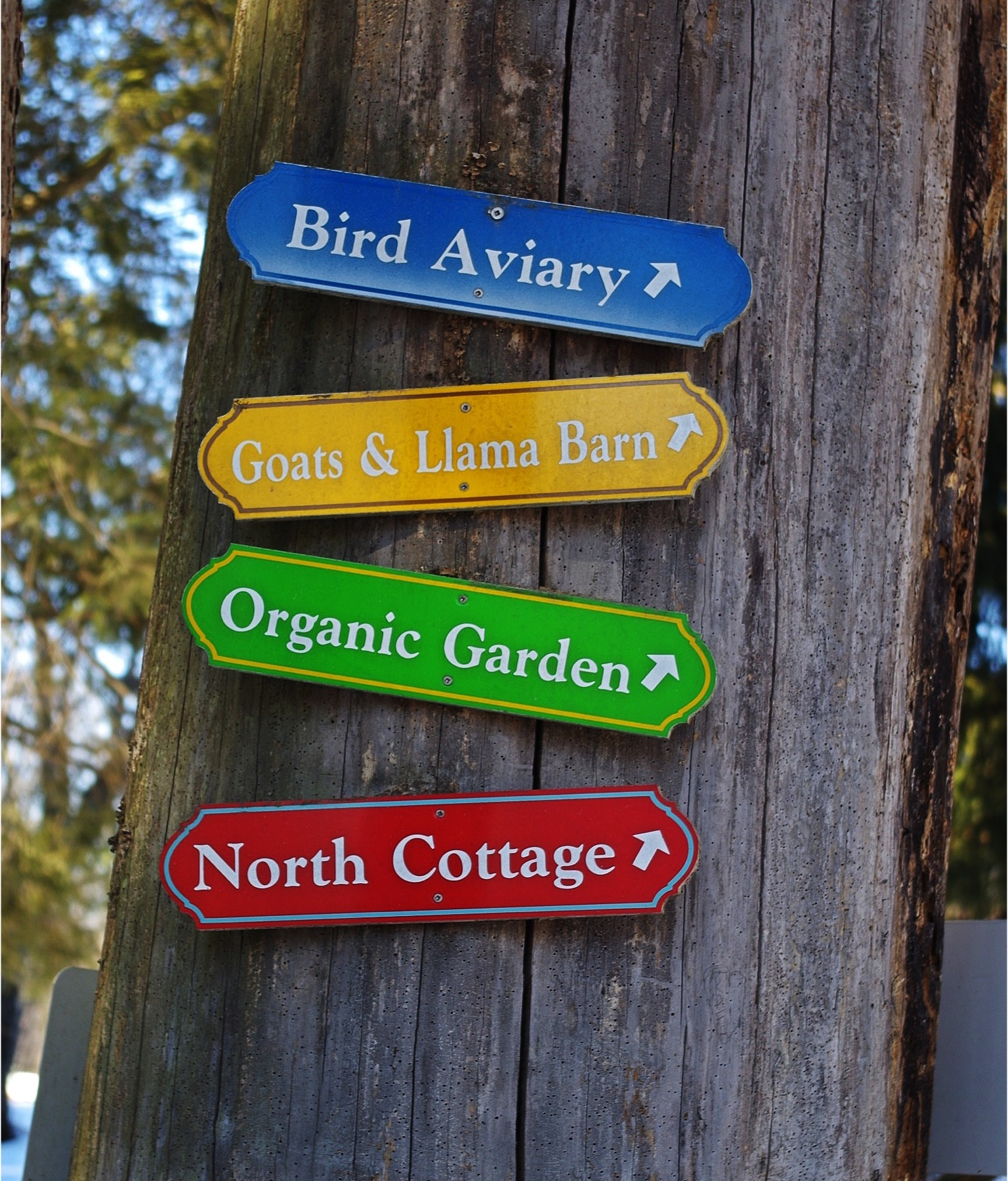
We held hands, stopping only to allow me to remove my mittens, raise my camera, and snap away. Then, bundled up again, hand-in-hand, mitten-in-glove, we continued on. My spouse of 47 years, led the way across the bridge, snowy paths and the icy patches, ensuring that together we were sure-footed. Every few minutes we stopped to soak in the beauty of our surroundings, but steadfast in our intention to reach the llama pens and barn on the outskirts of the property.
I enjoyed the walk in the woods and in particular by this scene. I recall it often, even a week after having seen it. I’m glad that I snapped these photos, so that I can look back and remember the cold, the clear, crisp air, the exhilaration, the inspiration and the quiet that I experienced that afternoon, watching the lovely swans. Enjoy this mini-gallery
Sky Blue Clarity
Walk This Way
Walk This Way
Smile
Winter Woods
Backwoods Bridge
Wait Up!
One-man Bridge
Buried Bridle Path
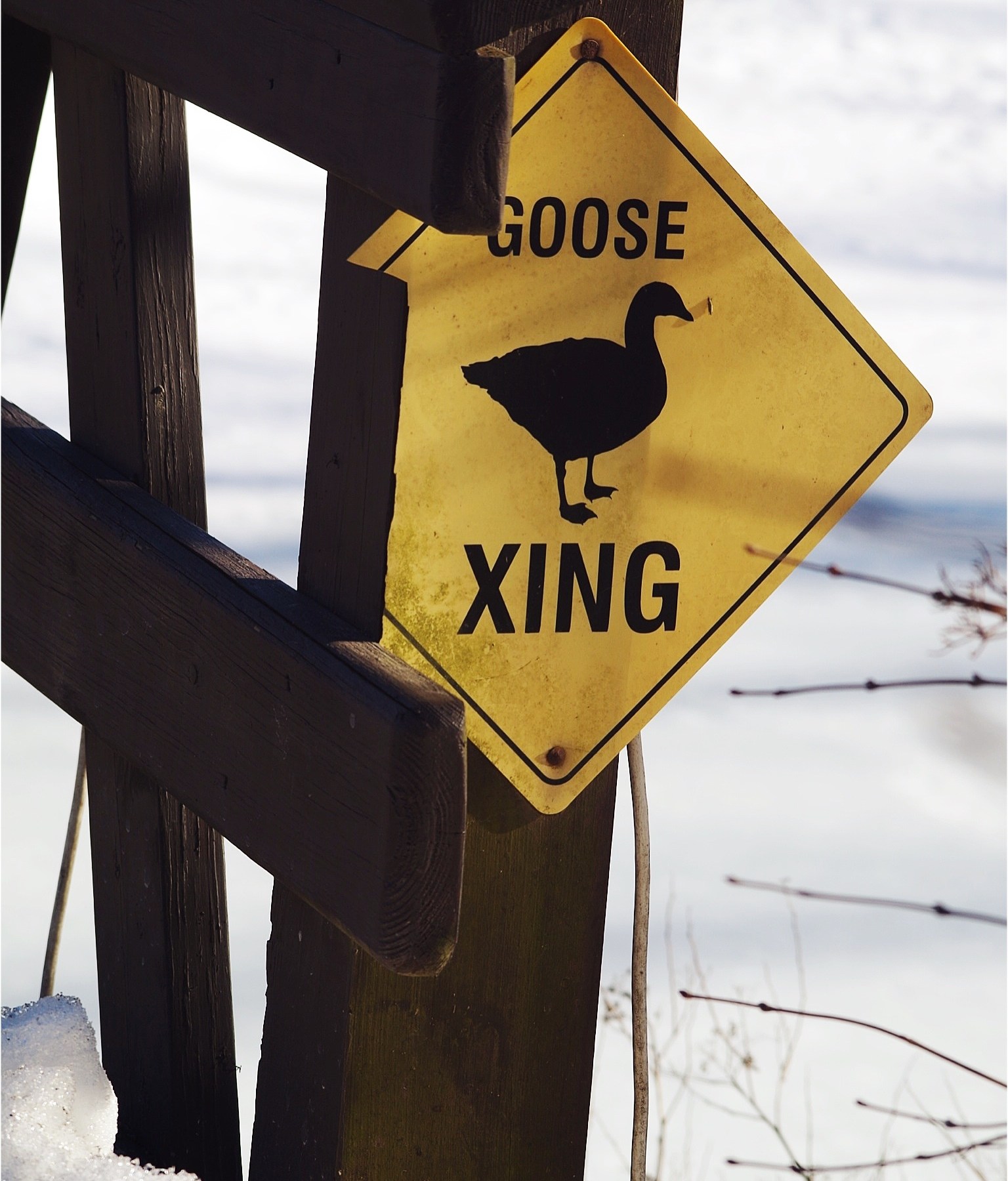
Goose Crossing
Slippery Slope
On Frozen Pond
(Swans, genus Cygnus, are birds of the family Anatidae, which also includes geese and ducks).
This poem was inspired by a walk in the woods at Buttermilk Falls Inn, when I came upon this long-forgotten bench. I began to think about what stories this ‘object’ might tell, could it speak. How many lovers, hand in hand, approached and stayed awhile? How many farewells were tearfully delivered while sitting together on this bench? How many woodland denizens have called this structure home? How many passers-by have kept on walking? And why, after all these years, does this inanimate object speak to me so eloquently of life, history, and promise for the future? I have no answers to these questions but this poem is an attempt to capture some of the mystery and beauty that this bench evokes. I leave it to the reader to further speculate.
I’m frozen ‘mid the snowy branch-felled brush,
Through years of weather-bearing solitude, alone,
I still replay the songs sincerely sung,
By lovers, stealing here from judging eyes.
I guard and safely hoard their sacred secrets,
And thus bear silent witness to the past,
Shedding light on what may someday be.
A boy and girl, a-blush and holding hands,
He wooed a willing love; her auburn locks
let down, then falling soft upon his arm.
They met each eve, as nightfall crossed the fields,
When dusky hues engulfed this hidden place,
Their wispy sighs, their ‘dare-to-speak-of’ dreams,
Here shared, launched and always, lingered free.
That fateful hour of their taking leave,
Descending twilight closing in, they’ll part,
Her tears, escaping from sienna eyes
Fell silent, salty gems upon his woven shirt,
One last, tender kiss for vows renewed.
I gave them shelter safe, a moment’s peace
from war-torn world, a tossing tempest sea.
I stand here still, most passers pass me by,
A moss-cloaked monument to seasons past,
Repositor of gardenia-laden dreams,
Holding secrets dear, they’re locked within
my rusting rungs and splintering splines,
Hints of hope ‘mid canine frames of iron,
Of seasons come and gone and yet to be.
This is my response to this week’s DP Challenge https://dailypost.wordpress.com/category/writing-challenges/ suggesting “Object” as a theme. the object in question is the bench in the photograph. I write in the first person, as the bench, and in so doing, mark the beginning of NaBloPoMo March (Theme: SELF).
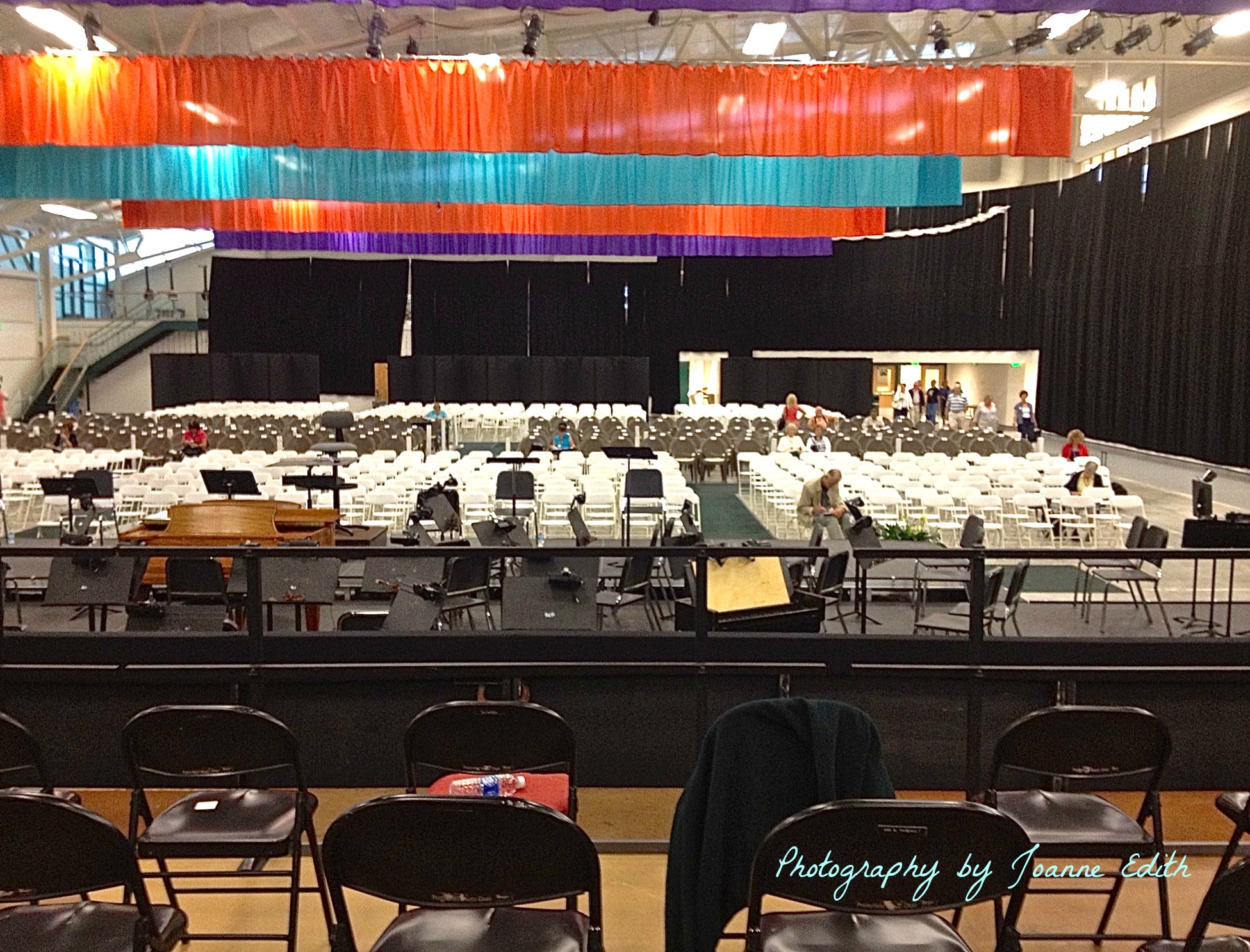
Looking out over the expanse of neatly arranged chairs, that in a few hours will be teeming with concert-goers, the stark contrast is clear. This anticipatory lull is prelude to a great crescendo of excitement. It’s as if calm before the storm; the lows needed to appreciate the highs; the darkness to welcome the light and the cold to hunger for warmth after a long, dreary winter.
Under the expert baton of a masterful interpreter of creative geniuses, both living and long departed, a well-executed fermata can become a passionate climax of great intensity and impact. There is a unanimity of spirit that pervades a space, as performers and concert goers alike come together to experience art from the ages, creating an aura of peace; the perception that all is right with the world. The audience is primed and ready to be swept away. They become a living, breathing barometer of the artistic excellence on display. Each musician becomes a piece of an intricate ensemble.
This moment in time, this unique performance, will never happen again. Recordings may be made, videos may capture the scene, but it’s the live experience that one is privileged to be part of. It’s the sense of a singular spirit pervading the performance space that so enhances the drama of the planned moments of silence.
Consider the conclusion of a spectacular symphonic performance, as the last notes echo throughout the concert hall, just before the audience erupts into thunderous applause. Or recall the stunning silence at the end of Act I in Puccini’s “La Boheme”, as Rodolfo and Mimi soar (offstage) to heavenly, romantic vocal heights: The audience dares not sigh, lest the spell be broken, before bursting into “Bravi!”.
Even in an non-concert venue, Epcot visitors of all ages, thrill to “Illuminations” and the music of Tchaikovsky, in the silent darkness of the penultimate moment, just before the blaring (complete with fireworks and booming blasts) grand finale of the “1812 Overture.”
The Choral Repertoire too, is filled with pauses designed to maximize the visceral impact of the music. The “Dies Irae” of the Dramatic Verdi, “Requiem”, and Mozart’s brilliant “Grand Mass in C Minor” (when peaceful simple bars of the “Kyrie” break joyously into the crashing opening measure of “Gloria”), exemplify this time-honored technique.
Most impressive is, perhaps, the final movement of Beethoven’s Ninth Symphony; a movement that in its premier was unheard by its composer / conductor, a totally deaf Beethoven. He experienced only silence, as the astounded audience raucously delivered their standing ovation. Finally he turned. Finally he ‘heard’ the impact that his final opus had on this opening night concert audience, an impact that would be repeated for ages to come.
Wait for it. There it is! From deep within the music, the silence inevitably steals in; filling the space, often speaking more eloquently than the sound that precedes or follows.
Listen to the silence. Listen.
🎶🎶🎶🎶🎶🎶🎶🎶🎶🎶🎶
Follow this link, if If you would like to read my previously published poem (on this site), ” The Sound of Silence”, an homage to Beethoven and that night of his silent victory.
🎶🎶🎶🎶🎶🎶🎶🎶🎶🎶🎶
This was written in response to the DPChallenge. This week, the challenge is to incorporate Silence into a post.
“Don’t blame the sinner.” Her words still simmer ‘neath the surface of my soul As if by nodding so her sin would be undone, Could be blotted out with brushes broad and white. She bears no shame, her hedon’s halo glows, As if the fault is mine for being blind, My expectations pure, unstained and true,
Don’t blame the sinner? Without her willful deed there is no sin, Like lonely falling trees in silent wilds, Their sound not heard, no ears to hear, And yet, the queens of light and dark abide, Whilst we, mere pawns, will pay a heavy price, She sheds her guilt. I quit her game.
********
This is my response to this week’s Speakeasy over at Yeah Write. The prompt requires writers to include “Don’t blame the sinner” as the first line of a fiction or poetry piece of 750 words or less; writers must also make some sort of reference to the above painting. Hope you enjoyed my contribution!
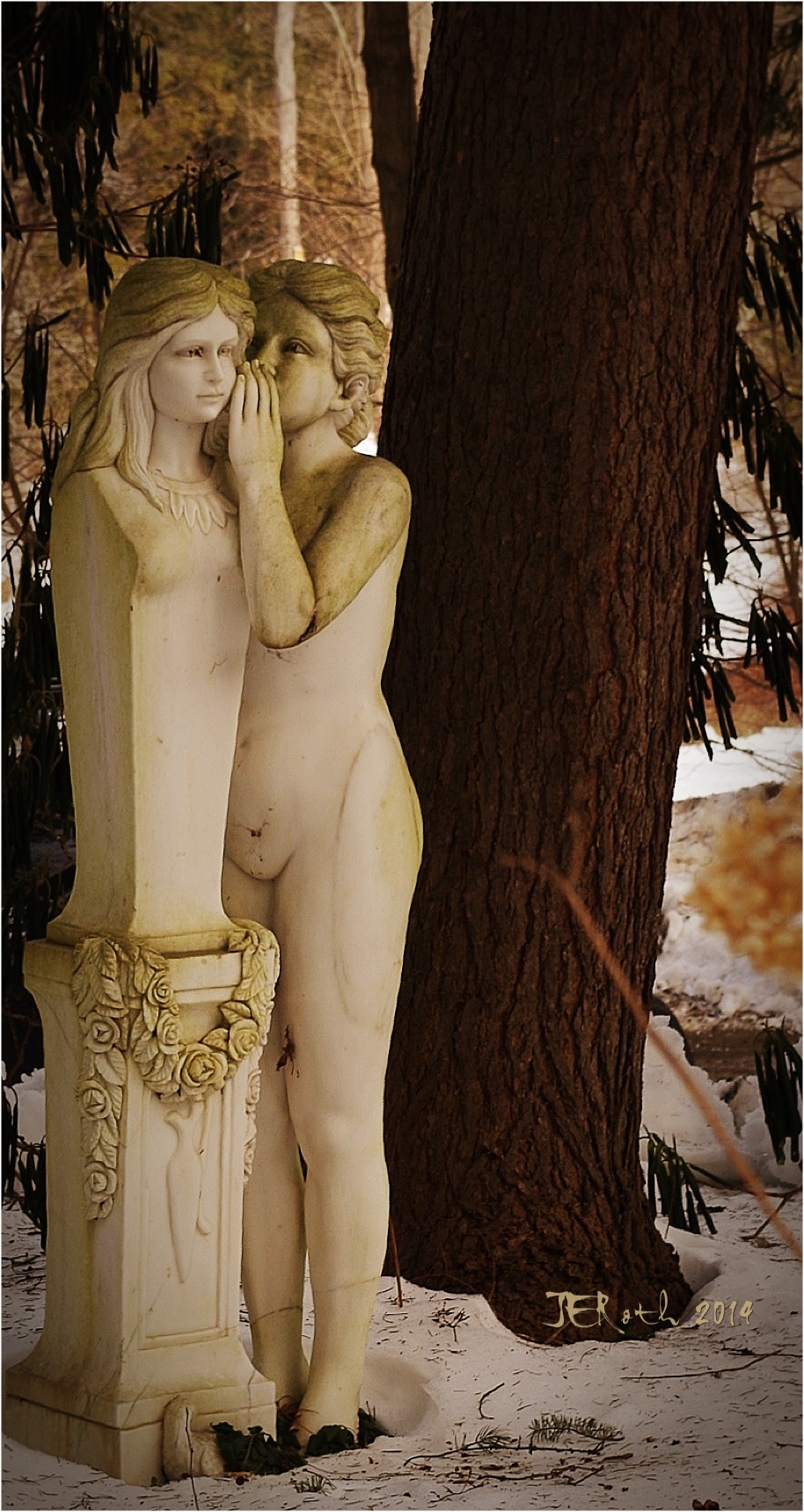


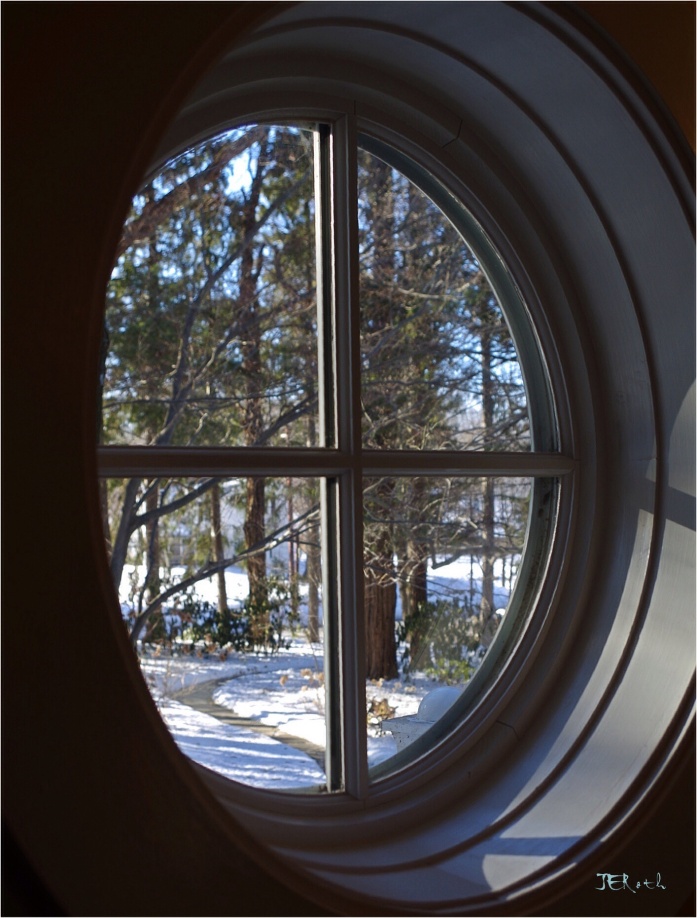 After months of snow and ice



 Seagull Perspective











 Opal Reflections